
How Repacking in China Can Reduce Shipping Volume and Freight Costs
Factories in China pack goods to survive the trip from the production line to their own warehouse — not necessarily to minimize what you pay for international transport. Cartons are often sized for factory handling, retail display or flat-pack convenience, with empty space, extra layers of packaging and irregular dimensions inside. Repacking at a China warehouse is the process of reorganizing that packaging before export so the cargo occupies less billable space and is better protected for the journey. It can reduce shipping volume and freight cost — but not for every shipment, and never as a guaranteed figure.
Quick Answer: Can Repacking Reduce Shipping Volume and Freight Cost?
Yes, it can — but it depends on the cargo. Repacking at a China warehouse reduces shipping volume when supplier packaging contains excess empty space, oversized cartons or more separate parcels than the goods require. Because carriers bill air freight on the greater of actual weight and volumetric (dimensional) weight, and bill LCL sea freight substantially on measured volume (CBM), a smaller measured volume can lower the charge. For light but bulky cargo, carton dimensions are often the single biggest cost lever.
What repacking cannot do is guarantee a saving. Dense, heavy cargo is billed on actual weight, so removing packaging changes little. Some goods must keep their original or compliant packaging. And the repacking work itself — labor, new cartons, palletizing, storage time — is quoted case by case based on cargo volume, handling requirements, storage duration, repacking work and shipping method. Whether repacking lowers your total cost is confirmed after the cargo arrives and is measured, not before.
When Repacking Usually Helps
- Supplier cartons are much larger than the goods inside (excess void fill and empty space)
- Many small cartons from several suppliers can be combined into fewer, stronger cartons
- Cargo is bulky but relatively lightweight, so volumetric weight — not actual weight — drives the charge
- Original packaging is retail-oriented or not suited to international handling
- Cargo needs palletizing, shrink-wrapping or a wooden frame / crate for export
Why Supplier Packaging Can Increase International Shipping Costs
Supplier packaging is designed for the factory's own logistics: protecting goods over a short domestic move, displaying products in retail channels, and packing efficiently for the factory — not for your international freight bill. Several common patterns increase the space your cargo occupies, and therefore what you pay:
- Empty carton space. Cartons are often sized to a standard box rather than the actual goods, with void fill, foam or air pillows occupying volume you are still billed for.
- Oversized cartons. Factories frequently use the carton size they have in stock, or a size that simplifies palletizing on their side — not the smallest safe box.
- Separate supplier packaging. When several suppliers each ship their own cartons, every parcel carries its own dimensions, labels and handling steps, and each may trigger its own minimum charge.
- Irregular dimensions. Oddly shaped or round goods packed in mismatched cartons stack poorly and leave unusable gaps in a container or on a pallet.
- Excess packaging layers. Double-boxing, retail packaging and branded display boxes add bulk that is not needed for ocean transit.
- Packaging unsuitable for international shipping. Weak single-wall cartons, unmarked boxes or packaging that cannot be palletized create handling risk and rework at the warehouse.
How Dimensional (Volumetric) Weight Turns Packaging Into Cost
Carriers charge on the greater of actual weight and volumetric weight. Volumetric weight is calculated from the shipment's dimensions — length × width × height, divided by a divisor that the carrier and transport mode set. The practical consequence: a carton that is light but bulky is billed for the space it occupies, not for what it weighs. A pallet of foam products and a pallet of steel parts of identical size can carry very different actual weights but similar volumetric charges.
That is why packaging is a freight-cost question, not just a protection question. Reducing the measured dimensions of the cargo — by removing empty space, combining cartons or repacking into tighter boxes — can reduce volumetric weight on air freight and measured CBM on LCL sea freight. The exact divisor and rates are set by each carrier and mode, so no honest forwarder can promise a fixed percentage saving in advance; the figures are confirmed when the cargo is measured after repacking. Our China air freight guide explains chargeable weight in more detail.
How Repacking Works at a China Consolidation Warehouse
Repacking is one step inside the wider consolidation workflow at our Shenzhen warehouse. As your China-side freight partner, we coordinate the full sequence:
- Supplier delivery. Your suppliers send their cartons to our Shenzhen warehouse address, or we coordinate pickup from their factories.
- Warehouse receiving. Each delivery is received, counted against the packing list, and recorded with visible condition noted.
- Cargo check. Outer packaging, labels and piece counts are checked so you have a record of what arrived from whom.
- Measurement. Carton dimensions and weights are recorded before any repacking, so the change in volume is measurable.
- Consolidation. Supplier shipments are combined for the agreed outbound shipment while later arrivals are still held in the warehouse.
- Repacking. Where it helps, excess outer cartons and void fill are removed, small cartons are combined into larger and stronger ones, and damaged cartons are replaced or reinforced.
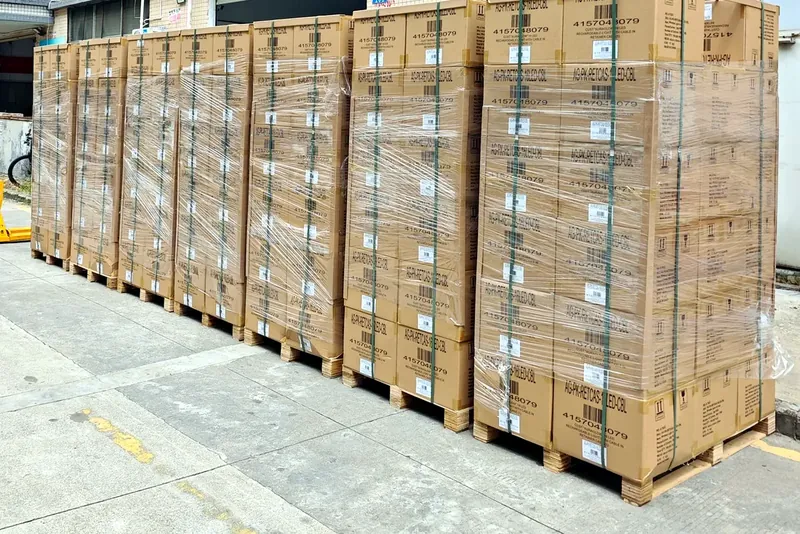
- Relabeling, palletizing or crating if required. Shipping marks and labels are applied, cargo is palletized and shrink-wrapped, and a wooden frame or crate is built where the cargo needs it.
- Final measurement. Final volume and weight are re-measured after repacking — the shipment is booked on actual figures, not estimates.
- Shipping arrangement. The cargo is booked as sea freight (FCL or LCL), air freight, or DDP where the service is available for your destination.
Two boundaries matter. First, we do not alter the products themselves — repacking is about protecting and organizing the cargo for the journey, not changing what you ordered. Second, not every shipment should be repacked: fragile, branded or regulated goods may need to keep their original or compliant packaging, and that is assessed per shipment before any work starts.
What Types of Cargo Can Benefit From Repacking
Repacking pays off most when the gap between "how the supplier packed it" and "how it should travel" is large. Typical examples from our warehouse work:
- Furniture parts and flat-pack furniture. Oversized cartons with void fill, irregular shapes, and packaging built for retail display rather than container space. Furniture parts are a common example — though only an example; specialized furniture shipping has its own considerations.
- Building materials. Tiles, panels and profiles are often packed in loose or weak cartons that can be consolidated and palletized far more densely.
- Machinery parts and hardware. Heavy items in over-sized boxes; the weight drives the charge, but tighter packing can still improve handling and pallet utilization.
- Electronics and appliances. Retail packaging adds bulk; a common approach is to keep the product's protective inner packaging while removing unnecessary outer display layers — assessed case by case.
- Apparel and textiles. Compressible goods where appropriate compaction can substantially reduce measured volume.
- Toys and mixed commodity orders. Many small cartons from several suppliers are the clearest case for combining into fewer, stronger cartons.
- Bulky but relatively lightweight cargo. Light foam, plastics, hollow items and similar goods are billed largely on volume, so packaging efficiency matters most here.
The common thread is not the product category — it is the mismatch between the supplier's packaging and international transport requirements.
Repacking vs Consolidation — What Is the Difference?
The two terms are often used together, and many shipments need both, but they solve different problems:
- Consolidation is about how many shipments you have. It combines goods from two or more suppliers into one outbound shipment, so instead of several separate deliveries you ship once. Read the full process in our guide to consolidating shipments from multiple suppliers in China.
- Repacking is about how the cargo is packed. It changes or improves the packaging itself — removing excess space, combining cartons, reinforcing weak boxes, palletizing — so the cargo is more suitable for transportation.
In practice they overlap: goods from several suppliers are consolidated at the warehouse, and the combined cargo is then repacked where that reduces volume or improves protection. A single-supplier shipment can still benefit from repacking; a multi-supplier consolidation can still ship in the suppliers' original cartons when that is the better choice. Both are part of the same China warehouse consolidation and repacking service.
When Repacking May Not Reduce Freight Cost
This is the part many "repacking services" pages leave out. Repacking adds handling work, and for some cargo the honest answer is that it will not reduce your freight cost — or is not advisable at all:
- Dense, heavy cargo. When the charge is driven by actual weight, removing packaging and empty space changes little. The cargo still weighs the same, and repacking labor is added on top.
- Already optimized cartons. If goods are already packed tight in right-sized cartons, there is little volume to remove.
- Cargo requiring original manufacturer packaging. Warranty terms, certifications, branded goods or products where the original packaging is part of the compliance chain may need to stay as supplied.
- Fragile products. Downgrading protective packaging to save volume risks damage in transit — a far more expensive outcome than the freight saved. Where protection is required, extra packaging is the right answer, not the problem.
- Regulated cargo. Some product types have packaging requirements tied to their handling class or destination rules; these are assessed case by case before any repacking is agreed.
- Shipments where extra protection is required. Long transit, LCL loads with heavy cargo stacked above, or rough final-mile handling can justify more packaging, not less.
Our approach is to measure first: cartons are checked and measured on arrival, and repacking is recommended only where the measured volume and cargo condition justify it. Sometimes the right recommendation is to leave the packaging as-is.
Sea Freight vs Air Freight: Where Volume Matters Most
The same repacked cargo is billed differently depending on the mode — which is why the mode decision comes after the final measurement.
Sea Freight (FCL and LCL)
On LCL sea freight, charges are driven substantially by measured volume (CBM) alongside weight, so reducing measured volume can reduce the volume-based charge. On FCL, the cargo pays for the whole container: tighter packing can mean a smaller container suffices, or that cargo which looked like FCL actually fits comfortably as LCL — the comparison is made on final measured figures, not estimates. See our China sea freight guide for routing and container options.
Air Freight
On air freight, chargeable weight is the greater of actual weight and volumetric weight, and volumetric weight is derived from the shipment's dimensions using the carrier's divisor. For light, bulky cargo, carton dimensions can be the dominant cost factor — which is why repacking is most often discussed for air shipments. Actual divisors and rates are set by each carrier and route, so we confirm the effect on your quote after measuring, rather than promising a fixed reduction.
DDP Door-to-Door
Where DDP shipping is available for your destination, the same final volume and weight figures feed the door-to-door calculation, with duties and taxes handled as part of the service. Repacking decisions affect DDP quotes exactly as they affect any other mode: through the measured figures the shipment is booked on.
Example Scenario: Six Suppliers, One Repacked Shipment
The following is an illustrative example for planning purposes — not a real customer shipment, and not a savings promise. It shows how the assessment works in practice.
A buyer sources from six suppliers across southern and eastern China. Each factory packs in its own way, and the goods all deliver to one Shenzhen warehouse:
| # | Supplier City | Goods | Packaging as Received | Warehouse Action |
|---|---|---|---|---|
| 1 | Foshan | Furniture parts | Oversized cartons, heavy void fill | Repacked tighter, palletized with wooden frame |
| 2 | Shenzhen | Electronics | Retail boxes inside outer cartons | Protective inner packaging kept; unnecessary outer layers reviewed |
| 3 | Dongguan | Hardware | Many small cartons | Combined into fewer, stronger cartons |
| 4 | Yiwu | Mixed commodities | Irregular carton sizes | Consolidated, relabeled with shipping marks |
| 5 | Ningbo | Home goods | Weak single-wall cartons | Cartons replaced or reinforced before export |
| 6 | Guangzhou | Textiles | Loose, compressible packing | Compacted where the goods allow it |
After repacking, the final volume and weight are re-measured, and the shipment is quoted on actual figures — then LCL, FCL and air freight are compared for the destination. Note what the example does not claim: not every carton is repacked (the electronics keep their protective packaging), and no saving percentage is promised. The point is that the mode decision and the quote are based on measured reality rather than factory estimates.
What Information Should You Send Before Repacking?
The more detail you can share up front, the faster we can assess whether repacking makes sense for your cargo:
- Number of suppliers and the cities they ship from
- Product type and any fragile, branded or regulated characteristics
- Cartons: how many, per supplier
- Carton dimensions — approximate is fine
- Weight per carton or per supplier, approximate is fine
- Photos if available — packaging photos are the fastest way for us to assess condition and void fill
- Ready date — when each supplier's goods will be finished
- Destination country / postcode
- Whether repacking, labeling or palletizing is required — or ask us to assess on arrival
If the final CBM and weight are not yet known, that is normal for pre-production planning. Final shipping cost is calculated after all cargo arrives at the warehouse and is measured — send what you have through our quote request form and we will plan from there.
Related Articles
Frequently Asked Questions
Yes. Your suppliers can send their cartons directly to our Shenzhen warehouse, or we can coordinate pickup from their factories. Each delivery is received, counted against the packing list and recorded before the cargo is consolidated, so you have a record of what arrived from each supplier.
Yes. Where it benefits the shipment, we can remove excess outer packaging, combine small cartons into larger and stronger ones, replace damaged cartons, apply shipping marks and labels, and palletize or build a wooden frame / crate where required. We do not alter the products themselves, and packaging that must stay intact for protection or compliance is kept.
It can, when the original packaging contains excess volume. Carriers bill on the greater of actual weight and volumetric weight, and volumetric weight is calculated from the shipment's dimensions using the carrier's divisor. Removing empty space and reducing carton dimensions can therefore lower volumetric weight — but whether it changes your charge depends on the cargo and the carrier's figures, so it is confirmed after measurement rather than promised in advance.
Yes. Goods from two or more suppliers are collected at our Shenzhen warehouse, held until the agreed consolidation stage, and combined into one outbound shipment. The full process — including how cut-off dates and different arrival times work — is covered in our guide to consolidating shipments from multiple suppliers in China.
Yes, where the goods remain adequately protected. Excess outer cartons and void fill can be removed, and multiple small cartons combined into fewer larger ones. Original manufacturer packaging, protective inner packaging and any packaging required for compliance or fragile goods is kept — we assess this per shipment before repacking starts.
Yes. Palletizing and shrink-wrapping are available where the cargo dimensions, weight, destination requirements and warehouse conditions suit it, and wooden frames or crates can be built where the cargo needs that level of protection. Suitability is confirmed for each shipment — not all cargo is suitable for palletizing.
We do not publish fixed repacking prices, because the work varies too much between shipments. Repacking and related warehouse services are quoted case by case based on cargo volume, handling requirements, storage duration, repacking work and shipping method. Send your shipment details and we will quote for your specific cargo.
Goods are held for an agreed consolidation window tied to your cut-off date, so suppliers delivering on different schedules can still ship together. The window and storage terms are planned for each shipment based on your suppliers' production and shipping schedules — there is no fixed free storage period, and duration is agreed as part of the plan.
Yes. After consolidation and repacking, the shipment is booked on the final measured figures by sea freight (FCL or LCL), by air freight, or as DDP where the service is available for your destination. We can recommend the best fit once the cargo is measured and your deadline and budget are known.